Mircea Lucescu Passes Away at 80: A Life Devoted to Football
Mircea Lucescu’s death marks the end of one of football’s most enduring careers — a life spent building teams, shaping identities and leaving a legacy across Romania, Turkey and Europe.
World football has lost one of its true architects.
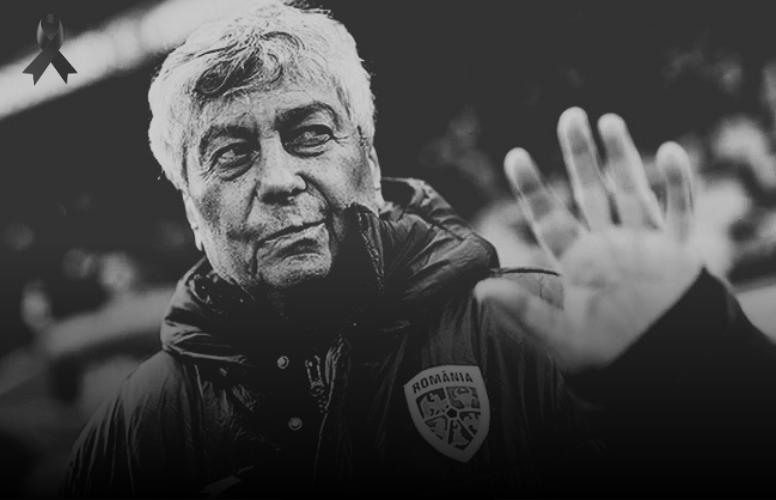
Mircea Lucescu has passed away at the age of 80, just days after stepping down as head coach of Romania national football team.
His departure comes not only as a moment of mourning, but as the closing chapter of a life that was never separate from football — only defined by it.
Lucescu resigned following a sudden illness before training, and was later hospitalized after suffering a heart attack. Despite medical intervention, the game has now lost one of its most enduring minds.
There is something almost poetic — and deeply symbolic — about how his journey ended. His final match on the touchline came in a 1-0 play-off defeat against Turkey national football team, a result that ended Romania’s hopes of qualifying for the 2026 World Cup.
But more than the result, it was the setting that carried weight.
That match was played at Vodafone Park — the home of Beşiktaş J.K., a club where Lucescu once stood as a champion, lifting the Turkish Süper Lig title and leaving a lasting legacy.
Football, in one final act of symmetry, brought him back to a place where he had once celebrated at the peak — this time, unknowingly, for a farewell.
Over a managerial career spanning nearly five decades, Lucescu left his mark across Europe’s football map. From Inter Milan to Beşiktaş J.K., from Shakhtar Donetsk to Dynamo Kyiv, and Zenit Saint Petersburg — his influence was not just measured in trophies, but in the systems he built, the players he shaped, and the football cultures he elevated.
As a player, he wore the Romania shirt 64 times and captained his country at the 1970 FIFA World Cup — long before becoming the mentor and visionary generations would come to know.
But beyond the titles and accolades, Lucescu represented something rarer in modern football: continuity, conviction, and a deep-rooted understanding of the game.
He didn’t just coach teams — he built identities.
And perhaps that is where the real legacy lies. Not in the medals, but in the countless careers he influenced, the philosophies he left behind, and the quiet authority with which he shaped football across eras.
We often speak about “lifelong dedication” in football — but in Lucescu’s case, it wasn’t a phrase. It was a fact.
He lived the game. Every day, every detail, every decision.
And fittingly, football was there with him — until the very end.