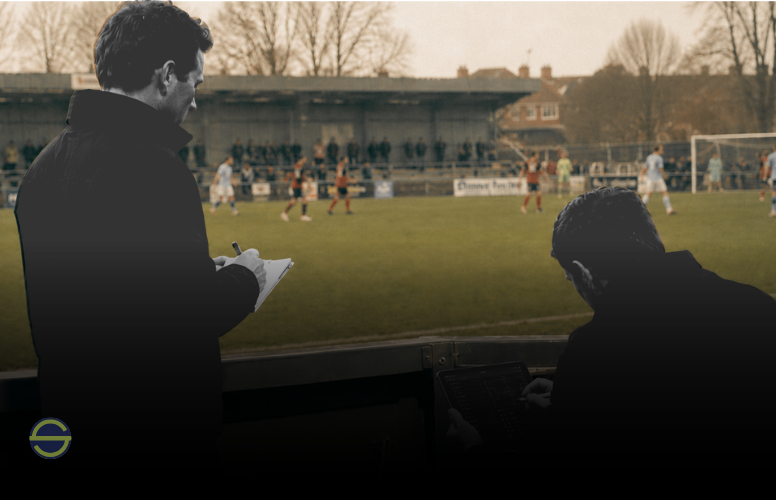
10 Careers in Football Beyond Playing
Football is no longer defined only by what happens on the pitch. From scouting and data analysis to coaching, medical care, recruitment, and operations, modern clubs rely on a wide range of professionals working behind the scenes. Here are ten meaningful career paths in football beyond playing.

When people think about building a career in football, the first image that often comes to mind is life as a professional player. The stadium, the pitch, the shirt, the matchday pressure — these are the most visible parts of the game.
But modern football is much bigger than the 90 minutes we watch.
Today, football clubs operate as complex, highly structured organizations. Behind every team are professionals working across recruitment, coaching, data, medical care, operations, communications, player development, and long-term strategy. Their work may not always be visible from the stands, but it has a direct impact on performance, sustainability, and the future of the game.
For people who love football but are not pursuing a playing career, this opens up a wide range of meaningful professional pathways. The industry needs analysts, scouts, coaches, medical specialists, communicators, administrators, and leaders who understand both the game and the environment around it.
Here are ten established and growing careers in football that go far beyond playing.
1. Football Scout
A football scout plays a central role in how clubs identify and evaluate talent. Scouts are responsible for finding players who fit a club’s technical needs, tactical identity, financial reality, and long-term sporting plan.
In the past, scouting was often associated mainly with live observation and personal judgement. Those instincts still matter, but modern scouting is far more structured. Today, scouts work with detailed evaluation frameworks, video platforms, data support, and internal reporting systems.
Some scouts focus on youth development, while others specialize in first-team recruitment, opposition analysis, or specific regions and markets. Their reports can influence transfer decisions, academy intake, succession planning, and squad development.
Key responsibilities
Football scouts usually attend matches, tournaments, and showcases; evaluate players across technical, tactical, physical, and psychological criteria; prepare structured scouting reports; monitor emerging markets; and work closely with analysts, recruitment teams, and sporting directors.
Pathway into the role
Many scouts begin at grassroots, academy, or local club level before moving into more professional environments. Building trust, developing a strong eye for talent, and gaining practical experience are essential. Talent identification courses, scouting certifications, and a strong football network can also help open doors.
2. Football Data Analyst
Data has become one of the most influential forces in modern football. Clubs now use performance data to support recruitment, match preparation, player development, and squad planning. The Football Data Analyst turns raw numbers into useful football insight.
This role is not only about collecting statistics. A good analyst understands context. They know that numbers mean different things depending on a team’s playing style, the quality of the league, the player’s role, and the tactical demands of a match.
Data analysts may help identify undervalued players, compare recruitment targets, build dashboards for technical staff, or support long-term squad strategy.
Key responsibilities
A Football Data Analyst may analyze player and team performance metrics, create recruitment benchmarks, build comparison models, design visual dashboards, interpret advanced metrics such as expected goals, progressive actions, and defensive activity, and present findings to coaches or recruitment departments.
Skills and background
This role usually requires strong analytical skills, comfort with data tools, and often knowledge of programming or statistical modelling. Just as importantly, analysts must be able to explain their findings clearly to people who may not have a technical background.
3. Professional Football Coach
Coaches are responsible for developing players, preparing teams, and bringing a football philosophy to life on the training ground and on matchday.
Coaching exists at many levels: grassroots football, academies, women’s football, youth development, semi-professional environments, and elite first-team football. While the level may differ, the core responsibility remains the same: helping players and teams improve.
Modern coaching is no longer limited to designing training sessions. Coaches now work closely with analysts, sports scientists, psychologists, medical departments, and recruitment teams. They must understand player development, tactical trends, communication, leadership, and performance environments.
Key responsibilities
Football coaches design and deliver training sessions, implement tactical ideas, support individual player development, prepare teams for matches, review performances, and collaborate with other departments inside the club.
Development path
Most coaches begin at youth or grassroots level and progress through formal coaching licenses. Continuous learning is essential. The best coaches are not only tactically knowledgeable; they are also strong communicators, teachers, and leaders.
4. Head of Recruitment / Recruitment Manager
The Head of Recruitment leads a club’s player acquisition strategy. This is one of the most important strategic roles inside a modern football organization.
Rather than simply finding players, recruitment leaders define the club’s recruitment model. They decide how the club identifies talent, how scouting resources are used, how data supports decisions, and how shortlists are built. They also need to ensure that recruitment aligns with the club’s football identity, budget, and long-term squad plan.
This role often works closely with sporting directors, head coaches, scouts, analysts, agents, and club executives.
Key responsibilities
A recruitment leader may design the recruitment strategy, manage scouting networks, integrate data into decision-making, oversee transfer shortlists, coordinate due diligence, and support squad planning across multiple windows.
Career profile
This is usually a senior role that requires years of experience, strong industry relationships, and the ability to make decisions under pressure. Successful recruitment departments can shape the direction of a club for many seasons.
5. Sports Physiotherapist
Player availability is one of the most important factors in football performance. Sports Physiotherapists help players recover, return to play safely, and stay physically prepared for competition.
In professional football, physiotherapists are part of a wider performance and medical team. They work alongside doctors, strength and conditioning coaches, sports scientists, and coaches to manage injury treatment, rehabilitation, prevention, and recovery.
Their work can make the difference between a player missing weeks of competition or returning at the right time with the right level of readiness.
Key responsibilities
Sports Physiotherapists assess injuries, design treatment plans, manage rehabilitation programs, support injury prevention strategies, monitor recovery progress, and contribute to return-to-play decisions.
Professional requirements
This career requires formal physiotherapy qualifications, professional accreditation, and usually additional experience or specialization in sports environments. It is a demanding but highly valuable role within football.
6. Performance Analyst
The Performance Analyst focuses on the tactical and video side of the game. This role helps coaches and players better understand what happened during a match, what patterns are emerging, and how the team can improve.
Performance Analysts code matches, review footage, create presentations, and identify tactical details that may not be obvious in real time. Their work can influence pressing structures, build-up patterns, set pieces, defensive organization, and opposition preparation.
In many clubs, analysts are deeply embedded within the coaching staff and play an important role before, during, and after matches.
Key responsibilities
Performance Analysts review and code match footage, prepare pre-match and post-match reports, identify tactical strengths and weaknesses, support opposition analysis, and provide visual material for players and coaches.
Skills and background
This role requires strong tactical understanding, attention to detail, and familiarity with video analysis platforms. The ability to communicate clearly is also essential, because the best analysis is only useful when it can be understood and applied.
7. Licensed Football Agent
A Licensed Football Agent represents players in contract negotiations, transfers, and career planning. This role sits at the intersection of football, law, relationships, finance, and strategy.
Agents help players navigate important career decisions. They may negotiate contracts, speak with clubs, manage transfer opportunities, support commercial agreements, and advise on long-term development pathways.
The role can be highly competitive and demanding. It requires trust, discretion, regulatory knowledge, and strong relationships across the football industry.
Key responsibilities
Football agents negotiate player contracts and transfers, communicate with clubs and executives, advise players on career strategy, manage commercial opportunities, and ensure compliance with relevant regulations.
Professional requirements
Becoming an agent requires proper licensing under the relevant governing body. A deep understanding of football regulations, contracts, and transfer processes is essential.
8. Football Marketing & Communications Manager
Football clubs are no longer only sports teams. They are also media platforms, community institutions, global brands, and commercial organizations.
A Football Marketing & Communications Manager helps shape how a club speaks to supporters, partners, media, and the wider football world. This role covers brand identity, content strategy, digital growth, media relations, sponsorship activation, and fan engagement.
In an era where clubs communicate daily across multiple platforms, this role has become increasingly important.
Key responsibilities
Marketing and communications professionals develop digital campaigns, manage social media channels, coordinate content production, handle press communications, support commercial partnerships, and track fan engagement.
Skills and background
This career requires strong writing, storytelling, digital marketing, brand awareness, and communication skills. Football knowledge is valuable, but so is the ability to understand audiences and build trust through consistent messaging.
9. Academy Director
The Academy Director leads the long-term development structure of a club’s youth system. This is one of the most influential roles in shaping a club’s future.
Academies are not only about producing talented players. They are about creating environments where young people can develop technically, tactically, physically, mentally, and personally. The Academy Director is responsible for building that environment.
This role oversees coaching standards, youth recruitment, player progression, safeguarding, education, and alignment with the club’s football philosophy.
Key responsibilities
Academy Directors define the youth development strategy, manage academy staff, oversee player pathways, monitor progression, ensure safeguarding standards, and maintain compliance with federation or league requirements.
Career profile
This role usually requires advanced coaching qualifications, leadership experience, and a deep understanding of player development. It combines football expertise with education, management, and long-term planning.
10. Football Operations Manager
Football Operations Managers keep the football department running smoothly. Their work is often behind the scenes, but without it, the daily rhythm of a club would quickly break down.
This role involves planning, coordination, logistics, communication, scheduling, and compliance. Operations professionals support players, coaches, and executives by making sure the right systems are in place.
From travel planning to matchday preparation, training ground logistics, facility coordination, and regulatory paperwork, this is a role built on organization and reliability.
Key responsibilities
Football Operations Managers coordinate travel and accommodation, manage training schedules, support matchday operations, handle administrative processes, ensure compliance with rules, and improve internal communication between departments.
Career profile
This role suits people who are highly organized, calm under pressure, and comfortable working across multiple teams. It may not always be visible to supporters, but it is essential to a professional football environment.
Building a Career in Football
The football industry continues to professionalize, diversify, and expand. There are now more ways than ever to work in the game without being a professional player.
Some roles require formal qualifications. Others depend more on practical experience, networking, portfolio building, or specialist knowledge. But almost every football career benefits from the same foundations: curiosity, reliability, continuous learning, and a serious understanding of the game.
For anyone who wants to work in football, the first step is to look beyond the pitch.
Clubs, academies, agencies, media teams, technology companies, and football organizations all need people who can contribute to the sport in different ways. The opportunities are real — but they often belong to those who are prepared to learn the industry, build experience, and take the less obvious path into the game.
Football is not only played by eleven players on the field. It is built every day by the professionals behind them.